First aid kit checklist: what to keep at home
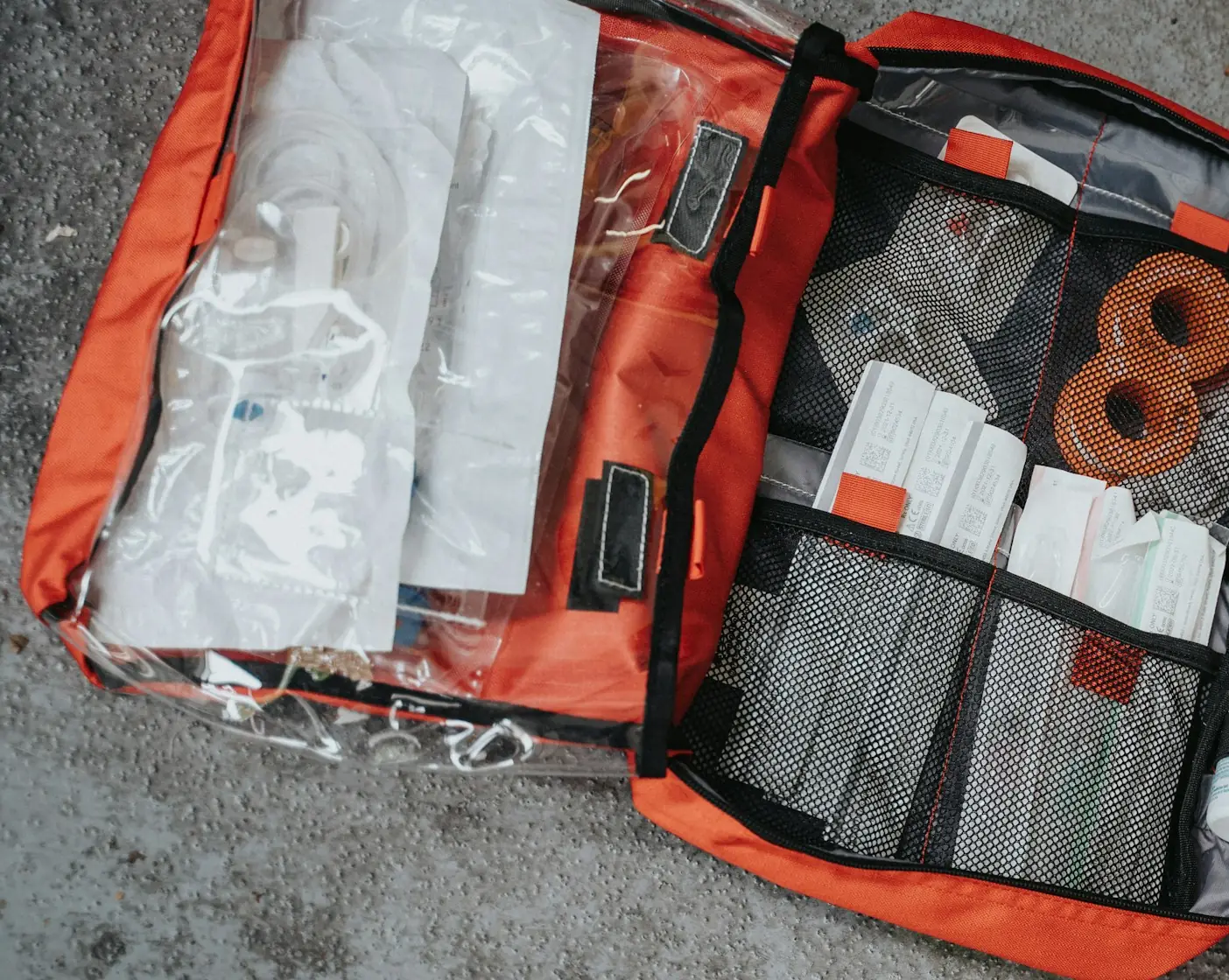
A good first aid kit costs little and takes an afternoon to put together. Here's what the Red Cross recommends for a family of four, as a list you can tick off.
Reviewed October 2026
The Shop links on this page go to Amazon. As an Amazon Associate we earn from qualifying purchases, at no extra cost to you. See our affiliate disclosure.
What to put in it
Quantities are the Red Cross's suggestions for a family of four.
| Item | How many |
|---|---|
| Absorbent compress dressings (5 × 9 in) | 2 |
| Adhesive bandages, assorted sizes | 25 |
| Adhesive cloth tape (10 yd × 1 in) | 1 roll |
| Antibiotic ointment packets (about 1 g) | 5 |
| Antiseptic wipe packets | 5 |
| Aspirin packets (81 mg each) | 2 |
| Emergency blanket | 1 |
| Breathing barrier with one-way valve | 1 |
| Instant cold compress | 1 |
| Non-latex gloves (size large) | 2 pairs |
| Hydrocortisone ointment packets (about 1 g) | 2 |
| Gauze roll bandage, 3 in wide | 1 |
| Roller bandage, 4 in wide | 1 |
| Sterile gauze pads, 3 × 3 in | 5 |
| Sterile gauze pads, 4 × 4 in | 5 |
| Oral thermometer (non-mercury, non-glass) | 1 |
| Triangular bandages | 2 |
| Tweezers | 1 |
| First aid instruction booklet | 1 |
Shop ready-made first aid kits on Amazon (opens in a new tab)Shop supplies to restock a kit on Amazon (opens in a new tab)
You can buy a ready-made kit or put your own together. Kits come in many sizes, and there are versions made for hiking, camping and boating.
Make it yours
- Prescription medicines and anything your doctor recommends for your household.
- Emergency phone numbers, including your doctor, pharmacy and Poison Control (1-800-222-1222).
- Everyday extras you're likely to reach for, such as pain relievers, allergy medicine, scissors and a flashlight.
For a longer emergency, ask your doctor or pharmacist how to keep an extra supply of your prescription medicines, and keep a list of doses with your emergency kit.
Keep it ready
- Keep one at home and one in the car, and know where the kit is at your workplace.
- Check it a couple of times a year. Replace anything used or past its date.
- Learn to use it. A first aid and CPR class from the Red Cross or the American Heart Association teaches more in an afternoon than any list can.
In a medical emergency, call 911.
Restock your kit
- Wound closure stripsSponsored pickShop on Amazon (opens in a new tab)
Hold the edges of a small, clean cut together. Deep, gaping or dirty wounds still need medical care.
- Stretch gauze rollsSponsored pickShop on Amazon (opens in a new tab)
Hold dressings in place on arms and legs. Individually wrapped rolls stay clean in a kit.
Items marked Sponsored pick link to one specific product. The brand pays us a higher commission when you buy it through our link, at no extra cost to you. We only feature products that suit the guide.
Sources
- Anatomy of a first aid kit, American Red Cross