Home canning basics: how to can food safely
Canning turns a good harvest into food that keeps on the shelf. Done the tested way, it's safe. Shortcuts can cause botulism, a rare but deadly food poisoning.
Reviewed October 2026
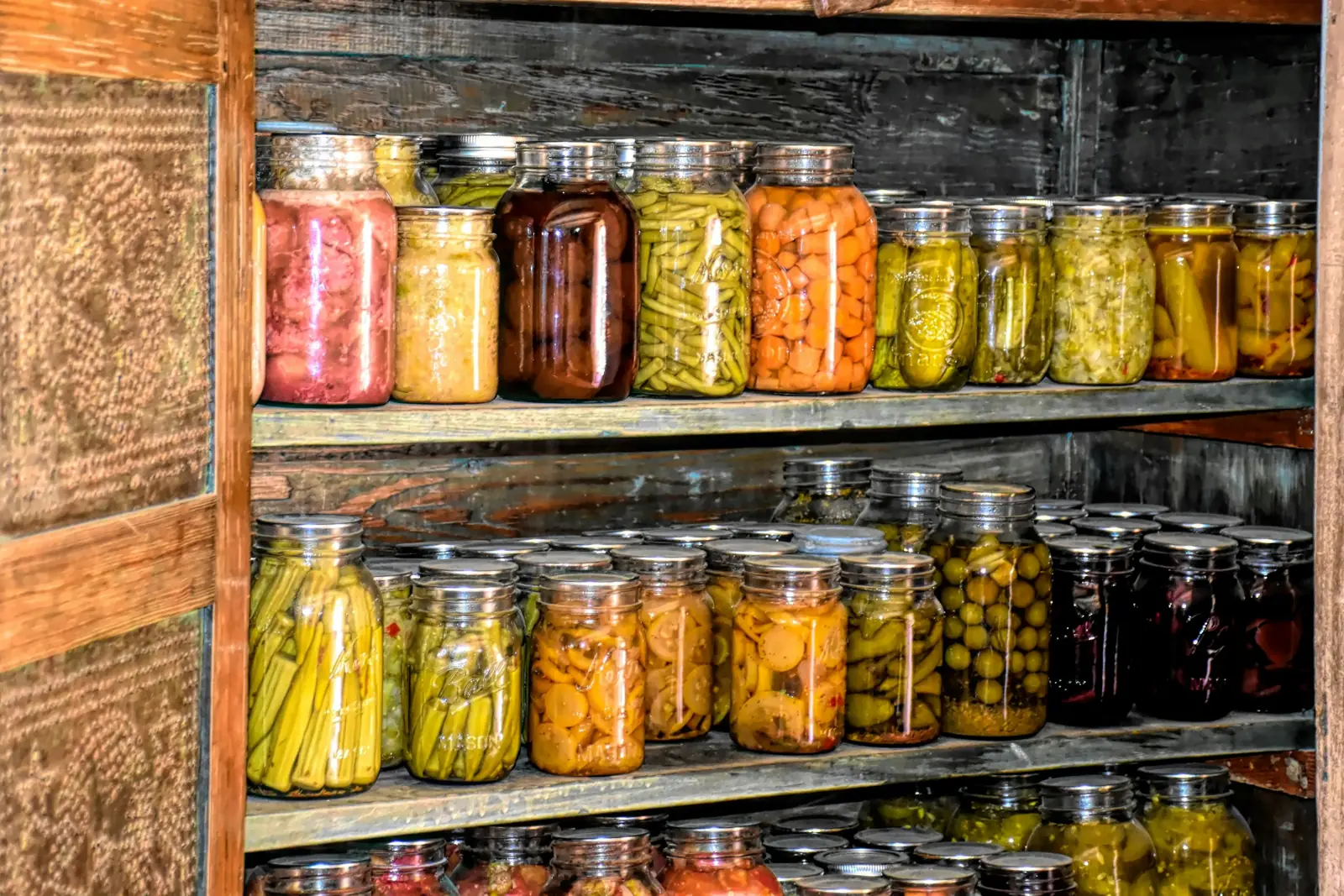
The one rule: use a tested recipe
Use only recipes that follow the USDA's Complete Guide to Home Canning, such as those from the National Center for Home Food Preservation or your state's Cooperative Extension service. The CDC's advice is not to use other recipes, even from people you trust.
A tested recipe has been checked in a lab for the jar size, the amount of acid, how tightly the food is packed and how long it's heated. Changing any of those, by using a bigger jar, adding flour or other thickeners, or cutting the acid, can leave the center of the jar too cool to be safe.
Two kinds of canner, for two kinds of food
| Food | Examples | Canner |
|---|---|---|
| High-acid | Most fruit, jams and jellies, pickles, tomatoes with added acid | Boiling-water canner (a deep pot with a rack and lid) |
| Low-acid | Vegetables, beans, meat, poultry, fish, soups | Pressure canner only |
Botulism bacteria can't grow in acidic food. In low-acid food sealed in a jar, they can, and boiling water doesn't get hot enough to destroy their spores. A pressure canner gets hotter than boiling water, which is why the CDC says it's the only safe method for low-acid foods.
Never use a boiling-water canner for vegetables, beans or meat. The CDC also warns against electric multi-cookers, even ones with a "canning" button, for low-acid foods.
Tomatoes need added acid
Some tomatoes are less acidic than others, so tested recipes add acid to every jar, whichever canner you use:
| Add to each jar | Pint | Quart |
|---|---|---|
| Bottled lemon juice | 1 tablespoon | 2 tablespoons |
| or citric acid | ¼ teaspoon | ½ teaspoon |
Use bottled lemon juice, not fresh, because its acidity is consistent. Don't can tomatoes from dead or frost-killed vines, and never thicken tomato products before canning.
Altitude changes the time or the pressure
Water boils at a lower temperature the higher you live. Above 1,000 feet, boiling-water recipes need longer processing, and pressure canners need more pressure. Our canning altitude calculator works out the change for your elevation.
Using a boiling-water canner
- Fill jars following your recipe, leaving the headspace it gives. Wipe the rims, then add lids and bands.
- Set the jars on the rack in hot water. Add boiling water until it's at least 1 inch above the jar tops, or 2 inches for processes longer than 30 minutes.
- Turn the heat to high. Start timing once the water is at a full boil, then keep a gentle but complete boil. If it stops boiling, start the full time again.
- When time is up, turn off the heat, take off the lid and wait 5 minutes. Lift the jars out straight, without tilting them.
- Let the jars cool undisturbed for 12 to 24 hours. Don't tighten bands or press on lids while they cool.
Using a pressure canner
- Vent it for 10 minutes before closing the vent and bringing it up to pressure: let steam flow freely from the open vent so air is pushed out.
- Let it cool on its own. Don't run water over it or open the vent early. Forced cooling can make food unsafe.
- Have a dial gauge tested every year before the canning season. Your county Extension office may offer this. Replace a gauge that reads more than 2 pounds high or low.
- Use a real pressure canner big enough to hold at least four quart jars. Smaller pressure saucepans aren't recommended.
Storing and opening jars
- Remove the bands from sealed jars, label and date them, and store them somewhere cool, dry and out of direct light.
- Put any jar that didn't seal in the fridge and use it first, or reprocess it following your recipe.
- Before you open a jar, look for warning signs. Throw it away without tasting it if the lid bulges, the jar leaks, liquid spurts or foams when opened, or the food looks moldy, discolored or smells bad.
- The CDC advises boiling home-canned tomatoes and low-acid foods before eating: 10 minutes below 1,000 feet, plus 1 minute for each additional 1,000 feet. The calculator shows the time for your elevation.
If you don't know whether safe canning guidelines were followed, don't eat it. When in doubt, throw it out.
Sources
- Home-canned foods and botulism, CDC
- Preserving food: using boiling water canners, National Center for Home Food Preservation
- Recommended canners, National Center for Home Food Preservation
- Using pressure canners, University of Georgia Cooperative Extension (archived)
- Canning tomato products safely, University of Minnesota Extension